Diagnostics and team tools
Agile Resources
Bertrand's Agile Resources
Assessments, papers, articles, books, links, Scrum diagrams, and leadership quotes for teams that want practical ways to improve collaboration and delivery.
Articles, papers, and books
Reference sites and collaborators
Diagrams and learning flows
Leadership and thinking notes
Leadership notes
Leadership, followership, and influence
Mission College coursework connecting leadership models, Agile practice, team dynamics, and professional experience. This is presented as reviewed coursework, not as a formal publication.
Leadership coursework
Leadership, Followership, and Influence
Coursework on leadership styles, sources of influence, situational models, personality traits, followership, and the application of Agile principles to knowledge work. The PDF includes instructor feedback.
Table of Contents
Resource map
Pick a resource tab to focus the page on one category at a time.
Curated resources
All resources
A combined view of the full Agile library.
Assessments
Self-assessments and diagnostic tools
Practical prompts and diagnostic tools for individual growth, team health, and delivery awareness.
Assessment
Link discontinuedImage discontinued
Differences Between Left and Right Hemisphere
One way of looking at learning styles is to determine your hemispheric dominance. Are you more right brained or left brained? We know that the cerebral cortex is the part of the brain that houses rational functions. I...
No active link
Assessment

Empathy Quotient Self-Assessment
Empathy Quotient, developed by Dr. Simon Baron-Cohen and colleagues, measures individual differences in empathy, an essential part of normal social functioning.
Assessment
GALLUP Q12 Engagement Self-Assessment
The Gallup Q12 is a survey designed to measure employee engagement. The instrument was the result of hundreds of focus groups and interviews. Researchers found that there were 12 key expectations, that when satisfied,...
Assessment
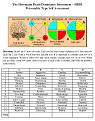
HBTI Personality Test
Self Assessment - The Herrmann Brain Dominance Instrument – HBDI Personality Type Self Assessment
Assessment
High-Level Achiever Self-Assessment
What exactly separates the successful from the downtrodden, the prolific author from the closet hack, the well-loved executive from the slime ball boss? The high achieving from the mediocre? Quite a lot, actually. One...
Assessment
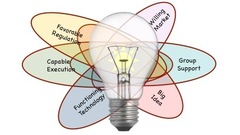
Innovative Behavior Self-Assessment
While most organizations give lip service to promoting innovation and creative ideas, they all too often sabotage "outside-the-box" thinking among the rank and file. In this book, David Owens has identified the six do...
Assessment

MBTI Personality Test
Self Assessment - The following test is designed to measure your MBTI Personality type. Completing the test should only take 15 minutes or so.
Assessment
Positive Assertiveness Self-Assessment
Being positively assertive can help you get more of what you want in life, reduce conflict, reduce frustration, relieve stress, and increase the quality of your relationships. The following are assertive thoughts that...
Assessment
Project Efficiency Self-Assessment
List of most common mistakes impacting the efficiency of a Project, based on input from some great Scrum Trainers and Coaches.
Assessment

Seductive Operational Bully (SOB) Assessment
Are you dealing with a SOB? Think about the following questions when referring to people with SOB tendencies in your organization. They are perfectly comfortable with their deviant behavior and unbothered about admitt...
Assessment
Seven Habits Profile Self-Assessment
Because The 7 Habits are based on principles, they bring the maximum long-term beneficial results possible. The Self-Scoring 7 Habits Profile can help you evaluate your current level of effectiveness. The higher your...
Assessment
Thomas-Kilmann Conflict Mode Instrument
Self Assessment - The Thomas-Kilmann Conflict Mode Instrument (TKI) is the world's best-selling assessment for understanding how different conflict-handling styles affect interpersonal and group dynamics. It's also a...
Assessment
Visual/Auditive/Kinesthetic (VAK) Self-Assessment
One of the most common and widely-used categorizations of the various types of learning styles is Neil Fleming's VARK model (sometimes VAK) which expanded upon earlier Neuro-linguistic programming (VARK) models: (i) v...
Articles
Editorial and research articles
Practical articles on communication, team behavior, decision-making, and delivery.
Article
Image discontinued
11 Ways Agile Adoptions Fail
Agile methodologies have been taking some heat for when they appear to have failed to deliver expected benefits to an organization. In my travels as an agile coach, what I have found to be the case is that agile pract...
Article
Preview unavailable
7 Special Things You Can Gift Your Agile Project Teams This Holiday Season
This holiday season, gift something invaluable to your Agile project teams. Whether you are an Agile Coach, Scrum Master, Project Manager or Product Managers, your team will cherish these gems for a long, long time. T...
Article
Preview unavailable
Agile Project Management with SCRUM
Article
Image discontinued
Five Reasons to Practice Timeboxing
5 Reasons to Practice Timeboxing Red Tani 3rd August Productivity 11 Comments 5 Reasons to Practice Timeboxing Timeboxing is a time management technique that limits the time during which a task (or set of tasks) is ac...
Article

Introduction to Scrum
Scrum is framework for managing the work done by a team of people to build a product. It is typically associated with Agile software development but has been applied to many other types of products. Work is performed...
Article
Link discontinuedImage discontinued
Key Arguments to Sell Scrum to Your Boss
Why should your boss let you implement Scrum in your organization? Things are already working, and they get their results. Well, one thing that I've noticed is always hard on the development side is to quickly respond...
No active link
Article

Predicting Velocity When Teams Change Frequently
As a measure of the amount of work completed in an iteration, velocity works extremely well when teams are relatively stable. If the same people stay on a team, it is reasonable to assume that the amount of work they...
Article

Release And Iteration Planning With Innovative Games
The term does not sit well with some traditional-type folks; to them it sounds unprofessional and not serious enough for important work. Yet the Innovation Games described by Hohmann are high performance facilitated w...
Article

Retrospectives: in your own sweet way
Retrospectives are one of the best practices for any agile software development methodology with a team-centric approach. You look back, evaluate what's been done, see what could have been done better and make decisio...
Article
Link discontinuedImage discontinued
Seven Common Mistakes with the Daily Stand-up Meeting
The daily stand-up meeting, also known as the daily scrum, may be the best of all of the agile practices. Why? Because it meets three criteria: (1) it's easy to start using, (2) it can often be used without other agil...
No active link
Article
Sometimes, the Boss really is a psycho
The bully, the narcissist, the know-it-all, even the psychopath. We may not like them, or want our children to be like them. But chances are, almost everyone who has worked long enough has a horror story about a super...
Article
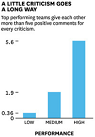
The Ideal Praise-to-Criticism Ratio
Which is more effective in improving team performance: using positive feedback to let people know when they're doing well, or offering constructive comments to help them when they're off track? New research suggests t...
Article
The Validity of the Herrmann Brain Dominance Instrument
The Herrmann Brain Dominance Instrument (HBDI) provides a valid, reliable measure of human mental preferences when applied in a professional way, interpreted in conformity with the four-quadrant model, and scored with...
Article
Preview unavailable
Three Elements of Great Communication, According to Aristotle
What makes someone a good communicator? There’s no mystery here, not since Aristotle identified the three critical elements — ethos, pathos, and logos. — thousands of years ago.
Article
Link discontinuedImage discontinued
Top Agile and Scrum Tools: Which One Is Best?
There are many different types of Agile tools out there. Some are free, some are paid, some are going by the new business model called "Freemium" in which you get a distilled version of the software but to get all the...
No active link
Article
Twelve C's for Team Building
People in every workplace talk about building the team, working as a team, and my team, but few understand how to create the experience of team work or how to develop an effective team. Belonging to a team, in the bro...
Article
Image discontinued
What I learned from Steve Jobs
Many people have explained what one can learn from Steve Jobs. But few, if any, of these people have been inside the tent and experienced first hand what it was like to work with him. I don’t want any lessons to be...
Papers
Practical papers and references
Long-form references covering behavior, leadership, systems, and organizational learning.
Paper

6 Thinking Hats: Train the Trainer
World's leading authority in creative and conceptual thinking. Author of over 67 books with translations into more than 38 languages. World renowned consultant to business, government and education. More than 500,000...
Paper
A Leader's Framework for decision Making
Cynefin Framework
Paper
Be Loyal With Those Absent
Being loyal to those who are absent and assuming good faith of others are keys to building trust in a culture. The ultimate test of principle-centered leadership is to be loyal to people who are absent when their name...
Paper
Link discontinued

Business crisis, threat and opportunity for Quality Management
This paper deals with crises in business context and within modern business organizations and communities. The issues are, however, relevant also for other kinds of organizations including public civil service and thi...
No active link
Paper
Center on Principles
Real character development begins with the humble recognition that we are not in charge, that principles ultimately govern. I don't talk much about ethics and values because to me those words imply situational behavio...
Paper
In Praise of Followers
Leaders matter greatly. But in searching so zealously for better leaders we tend to lose sight of the people these leaders will lead. Without his armies, after all, Napoleon was just a man with grandiose ambitions. Or...
Paper
One More Time: How Do You Motivate Employees?
Paper
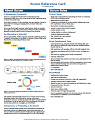
Scrum Reference Card
About Scrum. Scrum Roles. Scrum Meetings. Scrum Artifacts. Scaling. Related Practice. Team Self-Organization. When is Scrum Appropriate?
Paper
Seven Habits Revisited: Seven Unique Human Endowments
I see seven unique human endowments or capabilities associated with The Seven Habits of Highly Effective People. One way to revisit The Seven Habits of Highly Effective People is to identify the unique human capabilit...
Paper
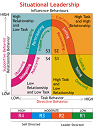
Situational Leadership
Over the last few decades, people in the field of management have been involved in a search for the "best" style of leadership. Yet, the evidence from research clearly indicated that there is no single app-purpose lea...
Paper
The Concept of "Ba": Building a Foundation for Knowledge Creation
A paper introduces the Japanese concept of "Ba" to organizational theory. Ba (equivalent to "place" in English) is a shared space for emerging relationships. It can be a physical, virtual, or mental space. Knowledge,...
Paper

The Price of Incivilities: Hidden Harassment
Pearson and Porath suggest nine best practices for containing incivility, based on what worked in the companies they studied: Have zero tolerance; take an honest look in the mirror (executives should use peer feedback...
Paper
The Psychopath in the C Suite: Redefining the SOB
Meet the SOB - Seductive Operational Bully - or psychopath "lite". SOBs don't usually end up in jail or psychiatric hospital but they do thrive in an organizational setting. SOBs can be found wherever power, status, o...
Paper
The Scrum Guide
Scrum is a framework for developing and sustaining complex products. This Guide contains the definition of Scrum. This definition consists of Scrum's roles, events, artifacts, and the rules that bind them together. Ke...
Paper
The Scrum Primer
The traditional way to build software, used by companies big and small, was a sequential life cycle commonly known as “the waterfall.” There are many variants (such as the V-Model), but it typically begins with a...
Paper

Visual Encoding
How do people perceive information? How designers can thrive on this process to help people understand data faster? Let's try to look into this complex field and explore some basic principles: "the visual encoding is...
Paper
What You Don't Know About Making Decisions
The quality of a leader's decisions can make or break him. Yet most of us get decision making all wrong. Why? We take the least productive approach: advocacy. We argue our position with a passion that prevents us from...
Paper
Who Has the D? How Clear Decision Roles Enhance Organizational Performance
Books
Books and broader reading
Books and selected long-form reading for leadership, culture, and team effectiveness.
Book
Coping with Difficult People: The Proven-Effective Battle Plan That Has Helped Millions Deal with the Troublemakers in Their Lives at Home and at Work
Bosses, friends, family members, they've made your life hell -- until now! Based on fourteen years of research and observation, Dr. Robert Bramson's proven-effective techniques are guaranteed to help you right the bal...
Book - Soon
Covert Persuasion: Psychological Tactics and Tricks to Win the Game
When we make decisions we like to think we weigh the options carefully, look at all the possibilities, and make the best choice based on a rational examination of the facts. But in truth, much of our decision making h...
Book
Creative People Must Be Stopped: 6 Ways We Kill Innovation (Without Even Trying)
A framework for overcoming the six types of innovation killers. Everybody wants innovation—or do they? Creative People Must Be Stopped shows how individuals and organizations sabotage their own best intentions to en...
Book
Creativity Workout: 62 Exercises to Unlock Your Most Creative Ideas
Creativity was once thought to be a talent bestowed upon a lucky few. Today it is understood as a skill that we can all learn, develop and apply. And in today's economy--with information available to everyone and supp...
Book
Difficult Conversations: How to Discuss What Matters Most
We attempt or avoid difficult conversations every day-whether dealing with an underperforming employee, disagreeing with a spouse, or negotiating with a client. From the Harvard Negotiation Project, the organization t...
Book - Soon
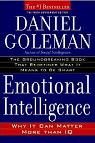
Emotional Intelligence: 10th Anniversary Edition; Why It Can Matter More Than IQ
Everyone knows that high IQ is no guarantee of success, happiness, or virtue, but until Emotional Intelligence, we could only guess why. Daniel Goleman's brilliant report from the frontiers of psychology and neuroscie...
Book
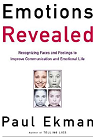
Emotions Revealed: Recognizing Faces and Feelings to Improve Communication and Emotional Life
Renowned psychologist Paul Ekman explains the roots of our emotions--anger, fear, disgust, sadness, and happiness--and shows how they cascade across our faces, providing clear signals to those who can identify the clu...
Book
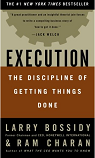
Execution: The Discipline of Getting Things Done
Disciplines like strategy, leadership development, and innovation are the sexier aspects of being at the helm of a successful business; actually getting things done never seems quite as glamorous. But as Larry Bossidy...
Book - Soon
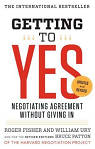
Getting to Yes: Negotiating Agreement Without Giving In
Since its original publication nearly thirty years ago, Getting to Yes has helped millions of people learn a better way to negotiate. One of the primary business texts of the modern era, it is based on the work of the...
Book
Gifts Differing: Understanding Personality Type
The late Isabel Briggs Myers devoted her life to the observation, study, and measurement of personality. With her mother, Katharine Briggs, she authored the Myers-Briggs Type Indicator(R) personality inventory. Peter...
Book
How People Tick: A Guide to Over 50 Types of Difficult People and How to Handle Them
The new edition of How People Tick is a practical guide to over 50 types of difficult people such as Angry People, Blamers, Impatient People, Workaholics and Gossips. Mike Leibling describes each difficult situation,...
Book
Innovation Games: Creating Breakthrough Products Through Collaborative Play
Innovation Through Understanding. The toughest part of innovation? Accurately predicting what customers want, need, and will pay for. Even if you ask them, they often can't explain what they want. Now, there's a break...
Book
Introducing NLP: Psychological Skills for Understanding and Influencing People (Neuro-Linguistic Programming)
Some people appear more gifted than others. NLP, one of the fastest growing developments in applied psychology, describes in simple terms what they do differently, and enables you to learn these patterns of excellence...
Book
Kanban and Scrum - making the most of both
Scrum and Kanban are two flavors of Agile software development - two deceptively simple but surprisingly powerful approaches to software development. So how do they relate to each other? The purpose of this book is to...
Book
Lateral Thinking: Creativity Step by Step
The first practical explanation of how creativity works, this results-oriented bestseller trains listeners to move beyond a "vertical" mode of thought to tap the potential of lateral thinking.
Book
Living the 7 Habits: The Courage to Change
Success that endures -- sustainable and balanced success -- can seem difficult to achieve in today's turbulent, complex world of change. But those who achieve this kind of success live by seven universal, timeless, se...
Book

Make Time For Success
(1) The big picture: knowing what you want. (2) Planning and scheduling: knowing what to do. (3) Clearing the clutter: achieving maximun productivity. (4) Beating the blues: conquering the barriers to success. (5) Eff...
Book
Managing Conflict at Work: Understanding and Resolving Conflict for Productive Working Relationships
Managing Conflict at Work provides practical guidance on how to prevent, contain and resolve conflict in the workplace. It demonstrates how effective conflict management can have a powerful impact on the way organizat...
Book

Part II: Personal Productivity and Development Tools
Time management, Stress Management, Information Skills, Communication Skills, Career Skills.
Book
Scrum Checklist 2011
Scrum is a framework with simple rules. Scrum Checklists will help you to remember these simple rules in the heat of daily work and stress. Scrum Checklists enable you to create an enjoyable and productive work enviro...
Book
Scrum and XP from the Trenches
This book aims to give you a head start by providing a detailed down-to-earth account of how one Swedish company implemented Scrum and XP with a team of approximately 40 people and how they continuously improved their...
Book
Six Thinking Hats
YOUR SUCCESS IN BUSINESS DEPENDS ON HOW WELL YOU THINK Six Thinking Hats can help you think better-with its practical and uniquely positive approach to making decisions and exploring new ideas. It is an approach that...
Book

Slack: Getting Past Burnout, Busywork, and the Myth of Total Efficiency
If your company's goal is to become fast, responsive, and agile, more efficiency is not the answer--you need more slack. Why is it that today's superefficient organizations are ailing? Tom DeMarco, a leading managemen...
Book - Soon
Telling Lies: Clues to Deceit in the Marketplace, Politics, and Marriage
From breaking the law to breaking a promise, how do people lie and how can they be caught? In this revised edition, Paul Ekman, a renowned expert in emotions research and nonverbal communication, adds a new chapter to...
Book
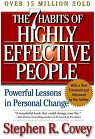
The 7 Habits of Highly Effective People
In The 7 Habits of Highly Effective People, author Stephen R. Covey presents a holistic, integrated, principle-centered approach for solving personal and professional problems. With penetrating insights and pointed an...
Book

The Definitive Book of Body Language
It is a scientific fact that people's gestures give away their true intentions. Yet most of us don't know how to read body language-and don’t realize how our own physical movements speak to others. Now the world's f...
Book
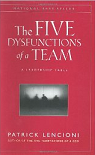
The Five Dysfunctions of a Team: A Leadership Fable
Once again using an astutely written fictional tale to unambiguously but painlessly deliver some hard truths about critical business procedures, Patrick Lencioni targets group behavior in the final entry of his trilog...
Book
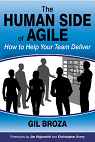
The Human Side of Agile - How to Help Your Team Deliver
As an Agile team leader, your biggest challenge is also your biggest asset. The human side of Agile is tricky. It's the least manageable, understood, and appreciated asset in an Agile environment. Even if your custome...
Book
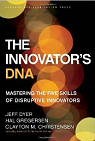
The Innovator's DNA: Mastering the Five Skills of Disruptive Innovators
Companies that are seen as innovators command an "innovation premium" in the market, and for good reason. These are the companies that not only adapt to changing conditions, but lead the way through them. The five dis...
Book
The No Asshole Rule: Building a Civilized Workplace and Surviving One That Isn't
"What an asshole!" How many times have you said that about someone at work? You're not alone! In this groundbreaking book, Stanford University professor Robert I. Sutton builds on his acclaimed Harvard Business Review...
Book
The Whole Brain Business Book
"The Whole Brain Business Book" is the long-awaited culmination of Ned Herrmann's highly respected and extensive research and testing. In it, he presents his four-quadrant model of the brain and the corresponding thin...
Web Links
Reference sites and collaborators
Frameworks, schools, tools, and reference sources connected to agile practice.
Link
Preview unavailable
Ahoona
Make a decision about anything. Have you ever ... Had trouble making a decision? Needed a simple way to get input from your friends? Just wanted to chat with someone about a decision? Wanted to see what people with si...
Link

Christopher Avery and The Leadership Gift
Leaders worldwide study Christopher's research because it shows them how to consciously expand their leadership power and ability every day so they can learn and grow faster, overcome challenges, and achieve their pot...
Link
Games pagePreview from Games page

Corporate Games Resources
Having Fun
Link
Preview unavailable
DEF - Decision Education Foundation
By educating people in decision-making and equipping them with effective methods by delivering decision skills, we enable them to tackle their choices in a more enlightened and empowered manner. Better decision-making...
Link
Image discontinued
Edge of Chaos
scrum, lean, kanbam, visualization, user experience
Link
Image discontinued
FranklinCovey
FranklinCovey is a global company specializing in performance improvement. We help organizations achieve results that require a change in human behavior. Our expertise is in seven areas: Leadership, Execution, Product...
Link
Preview unavailable
Human Metrics
Jung Typology Test, Jung Marriage Test, Small Business Entrepreneur Profiler, Risk Attitudes Profiler, Career Development Assessment, Visionary Test, Assertiveness Test, Morals Test, Role Model Profiler, Political Per...
Link

I Am a Princess
TV Advertisement from Disney to promote their resorts through the eyes of little girls willing to be a princess. This is an excellent allegory to leadership characteristics. "I am brave sometimes, I am scared sometime...
Link
Image discontinued
Ideation Helper
This mind-map helps in generating ideas by providing different perspectives.
Link
Image discontinued
MindTools
The full Mind Tools toolkit contains more than 700 management, career and thinking skills.
Link

Scrum Training Series
Free Online Scrum Master Video Training: The fun way to learn about Agile/Scrum, prepare for Scrum Master certification / Agile certification (CSM, CSPO, PSM, or PMI-ACP), and debunk popular misconceptions.
Link

Take Scrum Open Assessment
The Scrum Open assessment is the best tool for validating your basic knowledge of the Scrum framework. Taking the Scrum Open assessment will allow you to create a baseline of your current Scrum knowledge, from which y...
Link

The Royal Society for the encouragement of Arts
An enlightenment organisation committed to finding innovative practical solutions to today's social challenges. Through its ideas, research and 27,000-strong Fellowship it seeks to understand and enhance human capabil...
Link

Which Innovation Game is right for tackling your business problem?
From Discover to Shape to Prioritize to Act, there are many games available to put your ideas into action. But how do you know which game is right for you? Our handy Games Matrix classifies Innovation Games and seriou...
Scrum Flow
Learning diagrams for agile delivery
Visual guides for Scrum, task boards, flow, estimation, teams, and decision context.
Cynefin Framework
3 diagrams
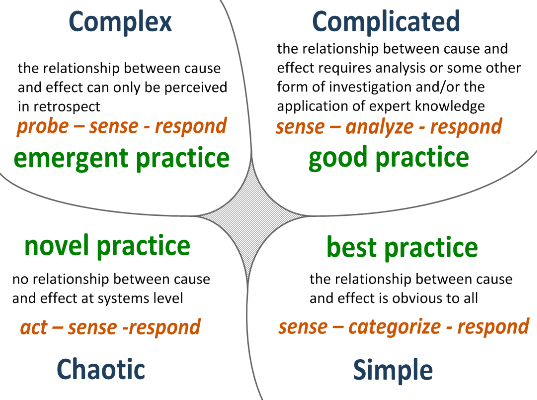
Diagram from the resource library.
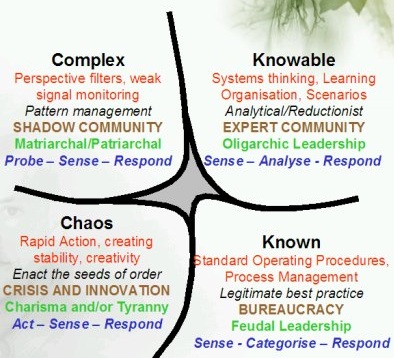
Diagram from the resource library.
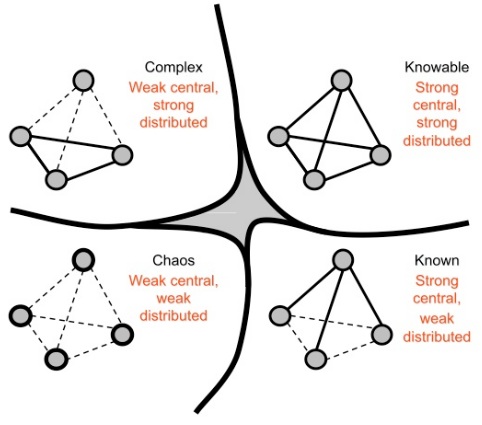
Diagram from the resource library.
Scrum Framework
8 diagrams
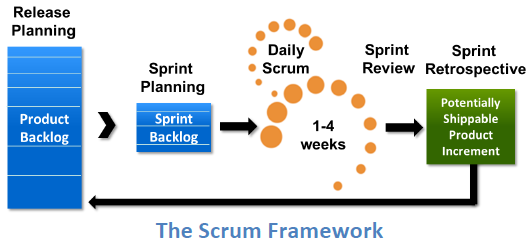
Diagram from the resource library.
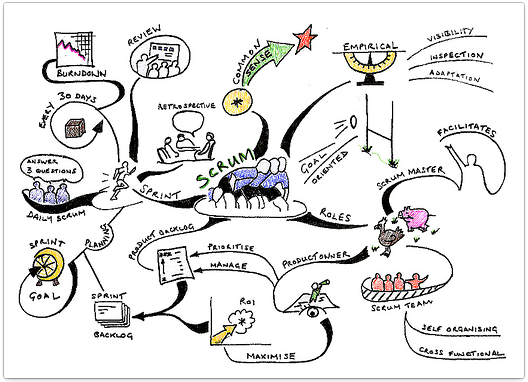
Diagram from the resource library.
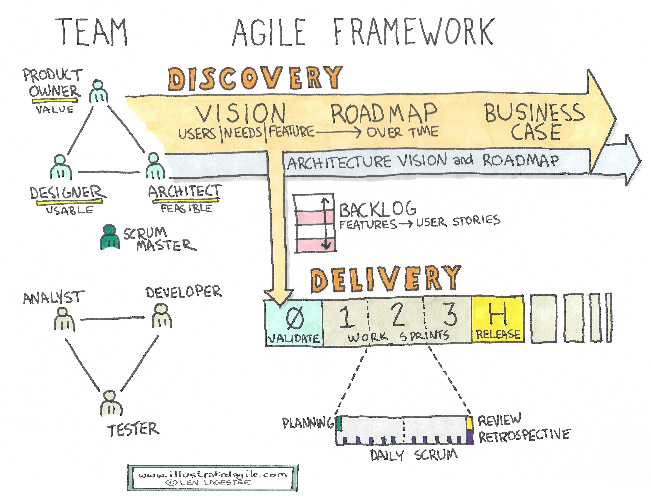
Diagram from the resource library.
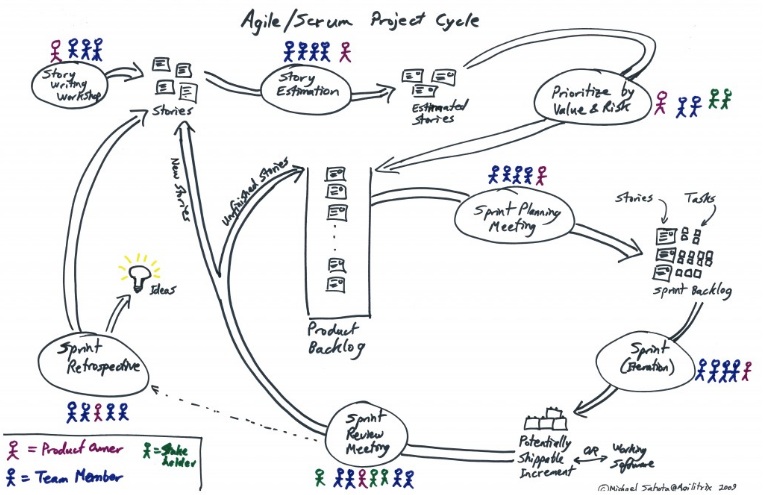
Diagram from the resource library.
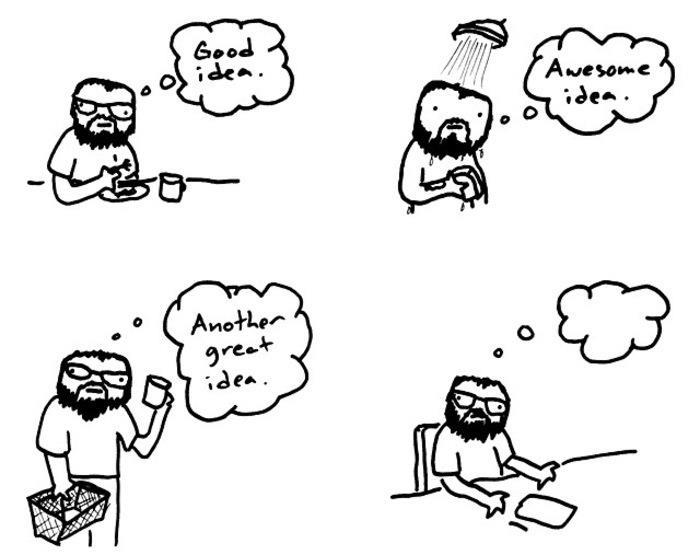
Diagram from the resource library.
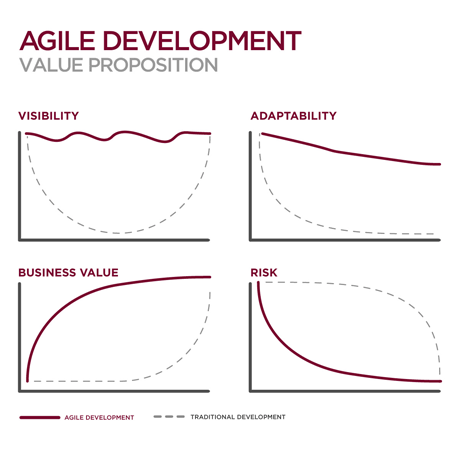
sponsored by www.versionone.com. Agile development accelerates the delivery of initial business value, and through a process of continuous planning and feedback, is able to ensure that value is continuing to be maximized throughout the development process. As a result of this iterative planning and feedback loop, teams are able to continuously align the delivered software with desired business needs, easily adapting to changing requirements throughout the process. By measuring and evaluating status based on the undeniable truth of working, testing software, much more accurate visibility into the actual progress of projects is available. Finally, as a result of following an agile process, at the conclusion of a project is a software system that much better addresses the business and customer needs. The diagram displays the differences between agile and waterfall development processes. By delivering working, tested, deployable software on an incremental basis, agile development delivers increased value, visibility, and adaptability much earlier in the life cycle, significantly reducing project risk.
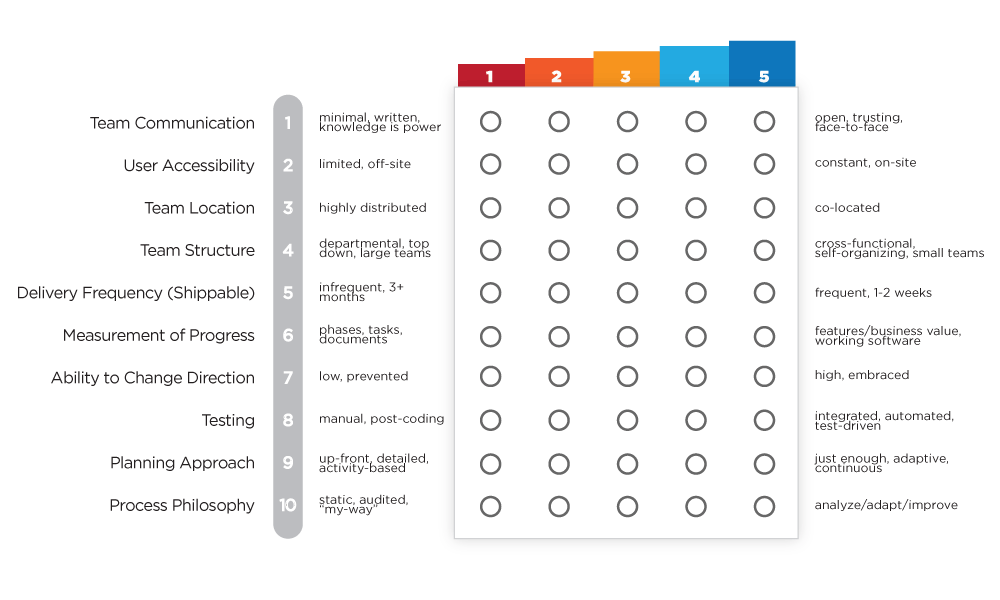
sponsored by www.versionone.com. Scoring: 50 points: Agile maven. 40-49 points: Agilist all the way. 30-39 points: Agilist in training. 20-29 points: Closet agilist. 10-19 points: Thanks for taking the test.
Diagram from the resource library.
Scrum Task Boards
5 diagrams
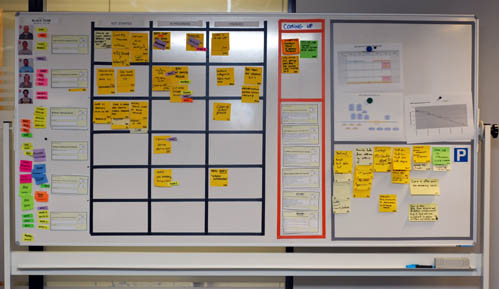
Diagram from the resource library.
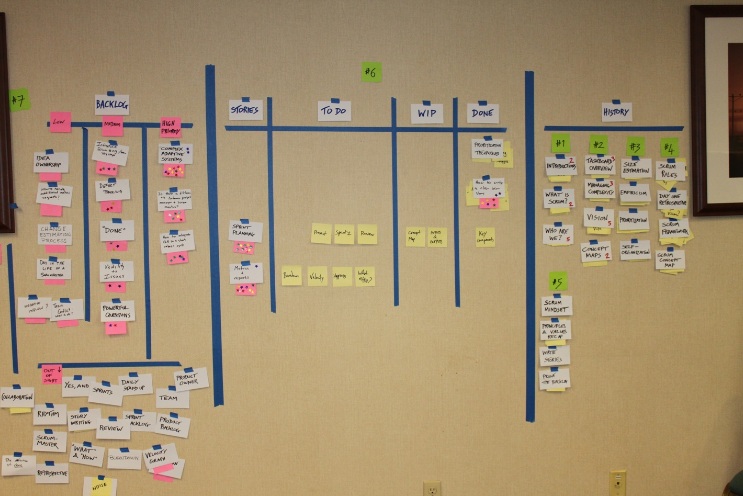
Diagram from the resource library.
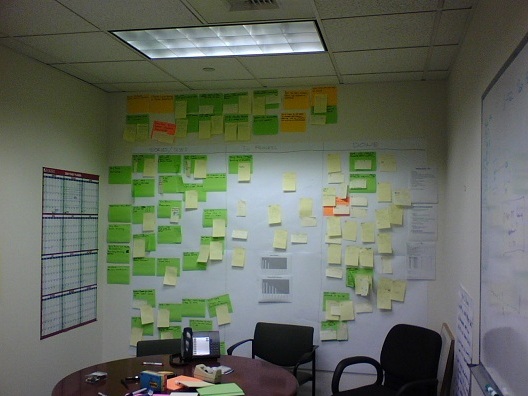
Diagram from the resource library.
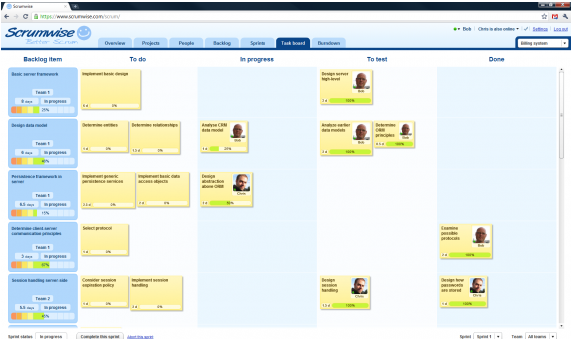
Diagram from the resource library.
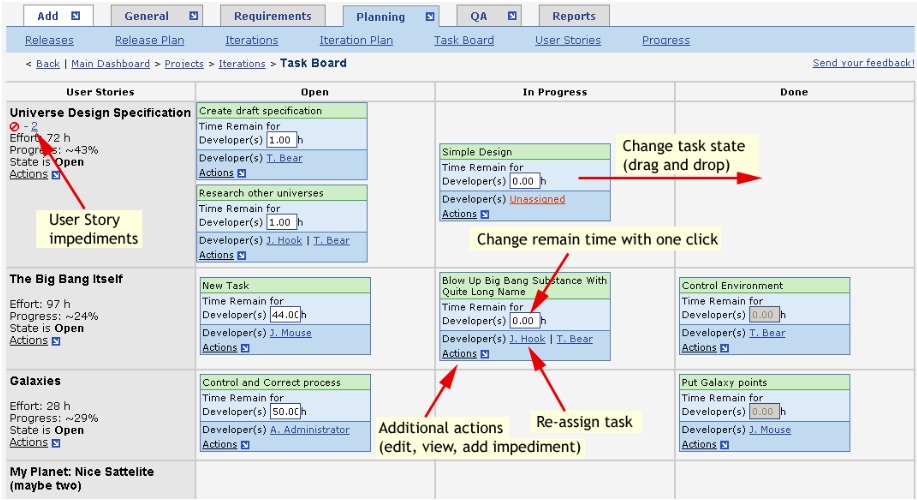
Diagram from the resource library.
Scrum Team
3 diagrams
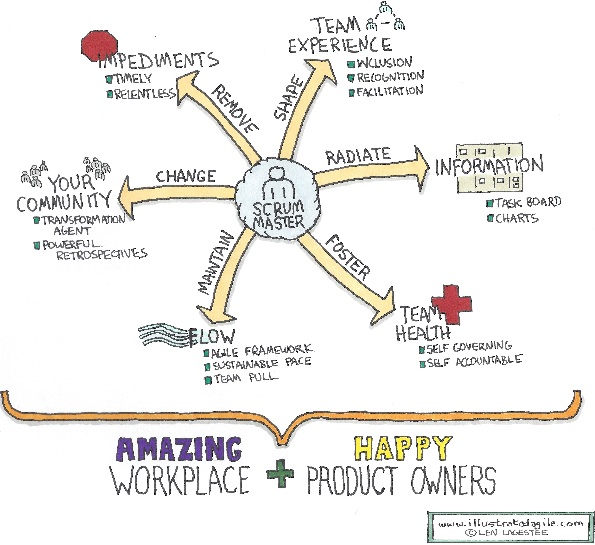
Diagram from the resource library.
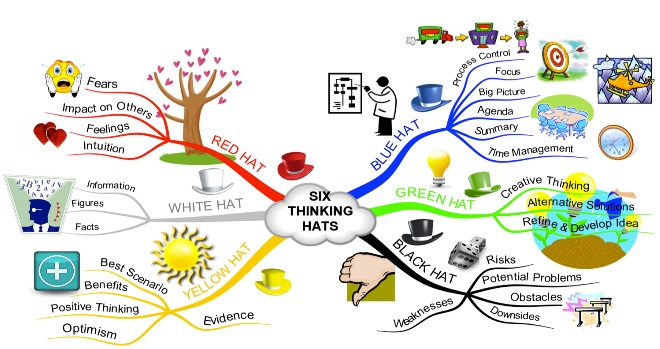
The 6 Thinking Hats from Edward de Bono: (1) blue hat: process control, focus, big picture, agenda, summary, time management; (2) Green hat:creative thinking, alternative solutions, refine and develop idea; (3) Black hat: risks, potential problems, obstacles, downsides, weaknesses; (4) Yellow hat: best scenario, benefits, positive thinking, optimism, evidence; (5) White hat: information, figures, facts; (6) Red hat: fears, impact on others, feelings, intuition.
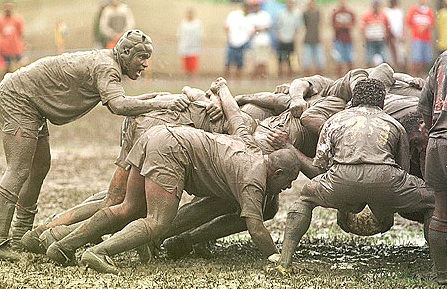
Diagram from the resource library.
Stories Prioritization and Estimation
2 diagrams
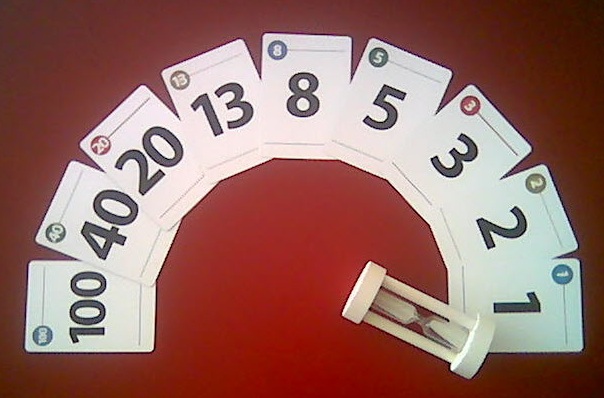
Diagram from the resource library.
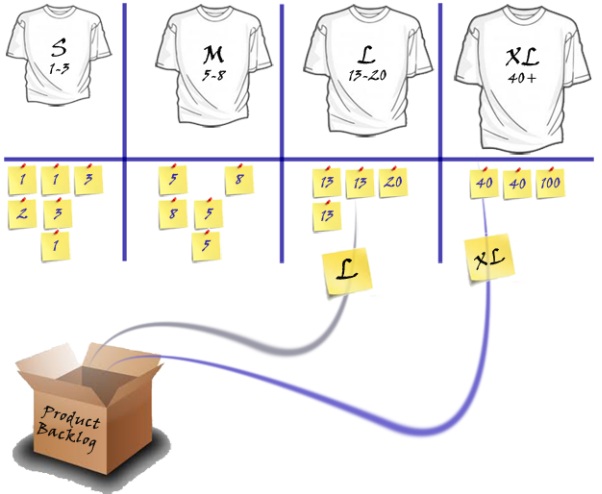
Diagram from the resource library.
DoD - Definition of Done
1 diagrams
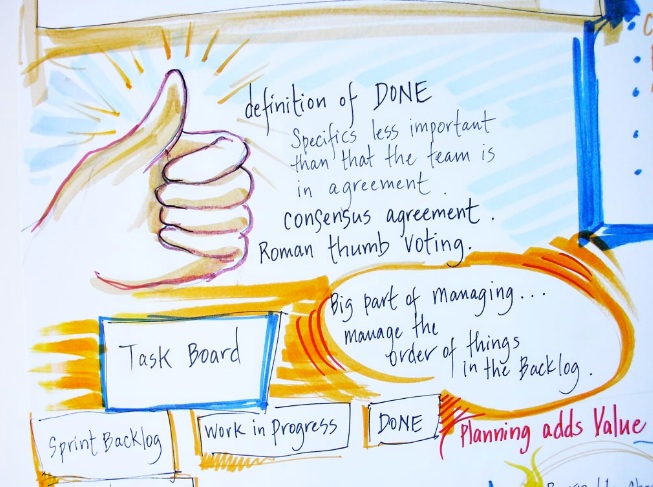
Diagram from the resource library.
Burndown Charts
2 diagrams
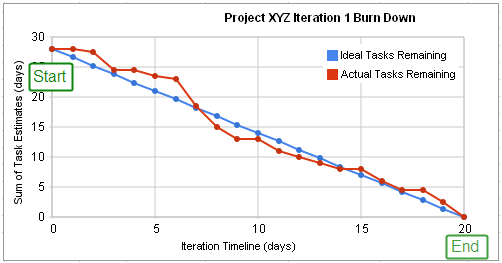
Diagram from the resource library.
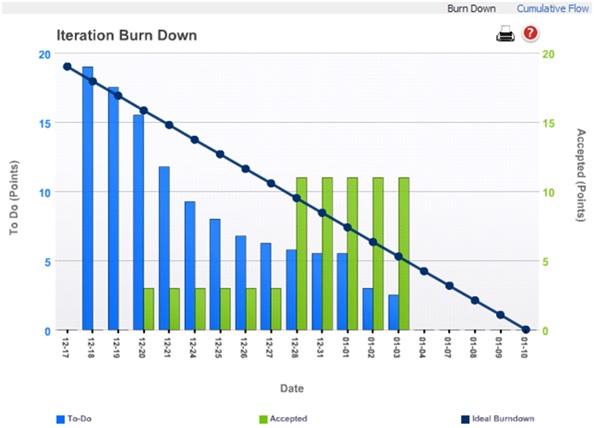
Diagram from the resource library.
Quotes
Leadership and thinking notes
Leadership, decisions, behavior, and action, collected as compact thinking prompts.
9 quotes
- If I had an hour to solve a problem I'd spend 55 minutes thinking about the problem and 5 minutes thinking about solutions.
- Insanity: doing the same thing over and over again and expecting different results.
- The world is a dangerous place to live; not because of the people who are evil, but because of the people who don't do anything about it.
- Learn from yesterday, live for today, hope for tomorrow. The important thing is not to stop questioning.
- A person who never made a mistake never tried anything new.
- The difference between stupidity and genius is that genius has its limits.
- Only two things are infinite, the universe and human stupidity, and I'm not sure about the former.
- Try not to become a man of success, but rather try to become a man of value.
- Great spirits have always encountered violent opposition from mediocre minds.
18 quotes
- Our greatest weakness lies in giving up. The most certain way to succeed is always to try just one more time.
- I have not failed. I've just found 10,000 ways that won't work.
- Being busy does not always mean real work. The object of all work is production or accomplishment and to either of these ends there must be forethought, system, planning, intelligence, and honest purpose, as well as perspiration. Seeming to do is not doing.
- Genius is one percent inspiration and ninety-nine percent perspiration.
- Many of life's failures are people who did not realize how close they were to success when they gave up.
- Just because something doesn't do what you planned it to do doesn't mean it's useless.
- There is no substitute for hard work.
- To invent, you need a good imagination and a pile of junk.
- I never did a day's work in my life. It was all fun.
- The three great essentials to achieve anything worth while are: Hard work, Stick-to-itiveness, and Common sense.
- Discontent is the first necessity of progress.
- Restlessness is discontent and discontent is the first necessity of progress. Show me a thoroughly satisfied man and I will show you a failure.
- Maturity is often more absurd than youth and very frequently is most unjust to youth.
- Anything that won't sell, I don't want to invent. Its sale is proof of utility, and utility is success.
- Nearly every man who develops an idea works it up to the point where it looks impossible, and then he gets discouraged. That's not the place to become discouraged.
- I never did anything by accident, nor did any of my inventions come by accident; they came by work.
- It is astonishing what an effort it seems to be for many people to put their brains definitely and systematically to work.
- There's a way to do it better - find it.
1 quote
To lead people, walk beside them ... As for the best leaders, the people do not notice their existence. The next best, the people honor and praise. The next, the people fear; and the next, the people hate ... When the best leader's work is done the people say, We did it ourselves!
1 quote
Leaders must be close enough to relate to others, but far enough ahead to motivate them.
1 quote
Dictators ride to and fro upon tigers which they dare not dismount. And the tigers are getting hungry.
1 quote
Control is not leadership; management is not leadership; leadership is leadership. If you seek to lead, invest at least 50% of your time in leading yourself—your own purpose, ethics, principles, motivation, conduct. Invest at least 20% leading those with authority over you and 15% leading your peers.
1 quote
All of the great leaders have had one characteristic in common: it was the willingness to confront unequivocally the major anxiety of their people in their time. This, and not much else, is the essence of leadership.
1 quote
If a rhinoceros were to enter this restaurant now, there is no denying he would have great power here. But I should be the first to rise and assure him that he had no authority whatever.
1 quote
The task of the leader is to get his people from where they are to where they have not been.
1 quote
The task of leadership is not to put greatness into humanity, but to elicit it, for the greatness is already there.
1 quote
Leadership is the art of getting someone else to do something you want done because he wants to do it.
8th Century BC Greek poet1 quote
The best is he who calls men to the best. And those who heed the call are also blessed. But worthless who call not, heed not, but rest.
1 quote
Never give an order that can't be obeyed.
1 quote
Leadership must be based on goodwill. Goodwill does not mean posturing and, least of all, pandering to the mob. It means obvious and wholehearted commitment to helping followers. We are tired of leaders we fear, tired of leaders we love, and of tired of leaders who let us take liberties with them. What we need for leaders are men of the heart who are so helpful that they, in effect, do away with the need of their jobs. But leaders like that are never out of a job, never out of followers. Strange as it sounds, great leaders gain authority by giving it away.
1 quote
Great leaders are almost always great simplifiers, who can cut through argument, debate, and doubt to offer a solution everybody can understand.
1 quote
Men make history and not the other way around. In periods where there is no leadership, society stands still. Progress occurs when courageous, skillful leaders seize the opportunity to change things for the better.
1 quote
Leadership is intentional influence.
Certain Trumpets: The Call of Leaders1 quote
The leader is one who mobilizes others toward a goal shared by leaders and followers. ... Leaders, followers and goals make up the three equally necessary supports for leadership.
1 quote
All Leadership is influence.
1 quote
You cannot be a leader, and ask other people to follow you, unless you know how to follow, too.
1 quote
Your position never gives you the right to command. It only imposes on you the duty of so living your life that others may receive your orders without being humiliated.
1 quote
The final test of a leader is that he leaves behind him in other men, the conviction and the will to carry on.
A Failure of Nerve1 quote
The function of a leader within any institution: to provide that regulation through his or her non-anxious, self-defined presence.
1 quote
People ask the difference between a leader and a boss. The leader leads, and the boss drives.
Driven To Lead1 quote
Humans will probably always need the help of especially gifted moral leaders in order to extend the bonds of caring and trust beyond the easy range of the family and the face-to-face community. Such bonds have become essential to the future of humanity.
1 quote
You don't lead by pointing and telling people some place to go. You lead by going to that place and making a case.
1 quote
The first responsibility of a leader is to define reality. The last is to say thank you. In between, the leader is a servant.
1 quote
Management is efficiency in climbing the ladder of success; leadership determines whether the ladder is leaning against the right wall.
1 quote
As a leader, you're probably not doing a good job unless your employees can do a good impression of you when you're not around.
1 quote
Leadership is not magnetic personality, that can just as well be a glib tongue. It is not "making friends and influencing people," that is flattery. Leadership is lifting a person's vision to higher sights, the raising of a person's performance to a higher standard, the building of a personality beyond its normal limitations.
1 quote
Leadership is the ability to establish standards and manage a creative climate where people are self-motivated toward the mastery of long term constructive goals, in a participatory environment of mutual respect, compatible with personal values.
1 quote
Never tell people how to do things. Tell them what to do and they will surprise you with their ingenuity.
1 quote
A leader is a dealer in hope.
1 quote
Lead and inspire people. Don't try to manage and manipulate people. Inventories can be managed but people must be lead.
1 quote
When the conduct of men is designed to be influenced, persuasion, kind, unassuming persuasion, should ever be adopted. It is an old and a true maxim, that a "drop of honey catches more flies than a gallon of gall.
1 quote
My own definition of leadership is this: The capacity and the will to rally men and women to a common purpose and the character which inspires confidence.
1 quote
High sentiments always win in the end, The leaders who offer blood, toil, tears and sweat always get more out of their followers than those who offer safety and a good time. When it comes to the pinch, human beings are heroic.
Lettres provinciales, 1656-7, Number 16, December 4,16561 quote
The present letter is a very long one, simply because I had no leisure to make it shorter.
Weird Ideas That Work: How to Build a Creative Company11 quotes
- Weird idea #01: Hire people who make you uncomfortable, even those you dislike
- Weird idea #02: Hire people you don't need
- Weird idea #03: Use job interviews to get ideas, not to screen candidates
- Weird idea #04: Encourage people to ignore and defy superiors and peers
- Weird idea #05: Find some happy people and get them to fight
- Weird idea #06: Reward Success and Failure, Punish Inaction
- Weird idea #07: Decide to do something that will probably fail, then convince yourself and everyone else that success is certain
- Weird idea #08: Think of some ridiculous or impractical things to do, then plan to do them
- Weird idea #09: Avoid, distract, and bore customers, critics, and anyone who just wants to talk about money
- Weird idea #10: Don't try to learn anything from people who seem to have solve the problems you face
- Weird idea #11: Forget the past, especially your company's successes
In Praise of Followers4 quotes
- Good followers see coworkers as colleagues rather than competitors.
- Insightful, candid, and fearless, [effective followers] can keep leaders and colleagues honest and informed. [...] they can also cause great trouble for a leader with questionable ethics.
- Effective followers and effective leaders are often the same people playing different parts at different hours of the day.
- Many managers insist that they want independent subordinates who can think by themselves. In practice, followers who challenge their bosses run the risk of getting fired.
The Definitive Book of Body Language5 quotes
- Being "perceptive" means being able to spot the contradictions between someone's words and their body language.
- When a person's words and body language are in conflict, women ignore what is said.
- Evidence shows conclusively that smiles and laughter build the immune system, defend the body against illness and disease, medicate the body, sell ideas, teach better, attract more friends, and extend life. Humor heals.
- When a listener folds his arms, not only does he have more negative thoughts about the speaker, but he's also paying less attention to what's being said.
- The fact is that body language is more honest than words.
Primal Leadership, The Hidden driver of Great Performance1 quote
Emotional leadership is the spark that ignites a company’s performance, creating a bonfire of success or a landscape of ashes. Moods matter that much.
Human Side of Agile1 quote
If the meeting you are about to attend has no stated purpose, please return to something that does.
Silent Messages -- A Wealth of Information About Nonverbal Communication1 quote
Total Liking = 7% Verbal Liking + 38% Vocal Liking + 55% Facial Liking
Lateral Thinking6 quotes
- Exclusive emphasis on the need to be right all the time completely shuts out creativity and progress.
- The importance attached to being right all the time breeds the inhibiting fear of making mistakes.
- No one is silly for the sake of being silly no matter how it might appear to other people.
- It is historical continuity that maintains most assumptions, not a repeated assessment of their validity.
- As far as lateral thinking is concerned the only thing which can be wrong with a pattern is the arrogant rigidity with which it is held.
- In Lateral Thinking one is not looking for the right answer but for a different arrangement of information which will provoke a different way of looking at a situation.
What You Don't Know About Making Decisions1 quote
voice without consideration is often damaging; it leads to resentment and frustration rather than to acceptance. When the time comes to implement the decision, people are likely to drag their feet if they sense that the decision-making process had been a sham - an exercise in going through the motions designed to validate the leader's preferred solution.
600 bc1 quote
Diversity in counsel, unity in command.
1 quote
Most of us assume that we are seeing the world the way it really is.
The Human Side of Agile9 quotes
- They [the Team] determine the best way, based on their understanding and within the organizational framework, to achieve their shared purpose of value delivery. No authority, such as a manager or a team leader, makes the decision for them.
- If they make a promise on which they don't follow through, they are inconsistent, which makes others doubt and mistrust them.
- Interpersonal fondation to work as a group: professional trust, respect and basic capability to work through conflicts.
- Greater Agility comes from greater autonomy and personal responsibility.
- You will not know enough, and we can't wait forever to gather every possible detail. Run with the information you have, or wait just until the last responsible moment to proceed.
- If the meeting you are about to attend has no stated purpose, please return to something that does!
- Employee engagement is closely linked to business performance (Gallup research)
- Team's good results are no guarantee of good results tomorrow, because their members are human
- Agility is more than just sprints, customer involvement, and cross-functional teams; it's a philosophy, a complete set of attitudes, beliefs, and values
1 quote
Better to seek forgiveness than ask permission.
The 7 Habits of Highly Effective People6 quotes
- You will find that the root of most issues that people are dealing with is "is it popular (acceptable, political), or is it right?" When we prioritize being loyal to a person or a group over doing what we feel to be right, we lose integrity. We may temporarily gain popularity or build loyalty, but, downstream, this loss of integrity will undermine even those relatioships. It's like badmouthing someone behind their back. The person you are temporarily united with through badmouthing someone else knows you would bad mouth them under different pressure and circumstances.
- Management is efficiency in climbing the ladder of success; leadership determines whether the ladder is leaning against the right wall.
- The key is not to prioritize what's on your schedule, but to schedule your priorities.
- Maturity is the balance between courage and consideration.
- Manage from the left [brain], lead from the right [brain]
- To paraphrase Peter Drucker, effective people are not problem-minded; they are opportunity-minded. They feed opportunities and starve problems. They think preventively. They have genuine Quadrant I crises and emergencies that require their immediate attention, but the number is comparatively small. They keep P and PC in balance by focusing on the important, but not urgent, high leverage capacity-building activities of Quadrant II.
Pensees/Edition de Port-Royal/XXVIII1 quote
The heart has its reasons which reason knows nothing of... We know the truth not only by the reason, but by the heart.
1 quote
Sometimes when I consider what tremendous consequences come from little things, I am tempted to think there are no little things.
Six Thinking Hats2 quotes
- Emotions - including a great deal of self-interest - are then broughts in to choose the route on the map. Every decision has a value base. We react emotionally to values.
- Usually, the only people who are very satisfied with their thinking skill are those poor thinkers who believe that the purpose of thinking is to prove yourself right: to your own satisfaction.
Kill The Company: End the Status Quo, Start an Innovation Revolution1 quote
Decades of experience have taught me that organizations that struggle with innovation commonly have entrenched behaviors and culture that deflate their innovative spirit. To change the trajectory of these firms, you have to kill the company first.
Innovation Games1 quote
I can't tell you anything about what I don't know I don't know. I can't even tell you that I don't know, because when I tell you that I don't know something, it actually means that I do know something: I know that I don't know it. When you claim that you don't know something, you actually do know something: you know that you don't know it. Thus, any movement from complete ignorance moves you into a continum of knowing.
Creativity Workout1 quote
Creativity is a skill that can be learned, developed and applied.
Harvard Business Review, Jan. 19581 quote
The ability to express one's own feelings and convictions balanced with consideration for the thoughts and feelings of others.
The Story of Philosophy: The Lives and Opinions of the World's Greatest Philosophers1 quote
Excellence is an art won by training and habituation: we do not act rightly because we have virtue or excellence, but we rather have these because we have acted rightly; 'these virtues are formed in man by his doing the actions'; we are what we repeatedly do. Excellence, then, is not an act but a habit: 'the good of man is a working of the soul in the way of excellence in a complete life... for as it is not one swallow or one fine day that makes a spring, so it is not one day or a short time that makes a man blessed and happy. (quoted phrases from Aristotle, the Nicomachean Ethics, Book II, 4; Book I, 7)
1 quote
Things which matter most must never be at the mercy of things which matter least.
Living in Grace: The Shift to Spiritual Perception1 quote
It is more noble to give yourself completely to one individual than to labor diligently for the salvation of the masses.
The Rambler #18, Saturday May 19, 17501 quote
There can be no friendship without confidence, and no confidence without integrity.
What I learned from Steve Jobs1 quote
Actually, Steve [Jobs] believed that A players hire A players - that is people who are as good as they are. I refined this slightly - my theory is that A players hire people even better than themselves. It's clear, though, that B players hire C players so they can feel superior to them, and C players hire D players. If you start hiring B players, expect what Steve called "the bozo explosion" to happen in your organization.